
What applicants and employers should know about disputing inaccurate or incomplete background check information.
Yes. If you believe information in a background check is inaccurate or incomplete, you generally have the right to dispute it.
Under the Fair Credit Reporting Act (FCRA), consumer reporting agencies that prepare employment background checks must maintain procedures to help ensure maximum possible accuracy. When incorrect information appears in a report, applicants may request a reinvestigation of the disputed information.
Understanding how the dispute process works is important for both applicants and employers involved in employment screening decisions.
What Types of Errors Can Be Disputed?
Background check disputes often involve information that is inaccurate, incomplete, outdated, or improperly matched to the applicant.
- Criminal records belonging to another person
- Incorrect case dispositions
- Duplicate records
- Expunged or sealed records reported improperly
- Incorrect employment verification results
- Incorrect education verification information
- Motor vehicle record inaccuracies
- Identity or address mismatches
Not every dispute involves identity theft or major reporting errors. Even small inaccuracies can affect hiring decisions if not corrected.
Who Handles the Dispute?
In most employment screening situations, the dispute is handled by the consumer reporting agency that prepared the report. The employer usually does not have the ability to directly change report information themselves. For this reason, applicants should direct disputes to the consumer reporting agency, not the employer.
The consumer reporting agency may:
- Review the disputed information
- Contact data providers or courts if necessary
- Reinvestigate the reported information
- Correct or update information when appropriate
- Issue updated reports if changes are made
The exact dispute procedures may vary depending on the type of information involved.
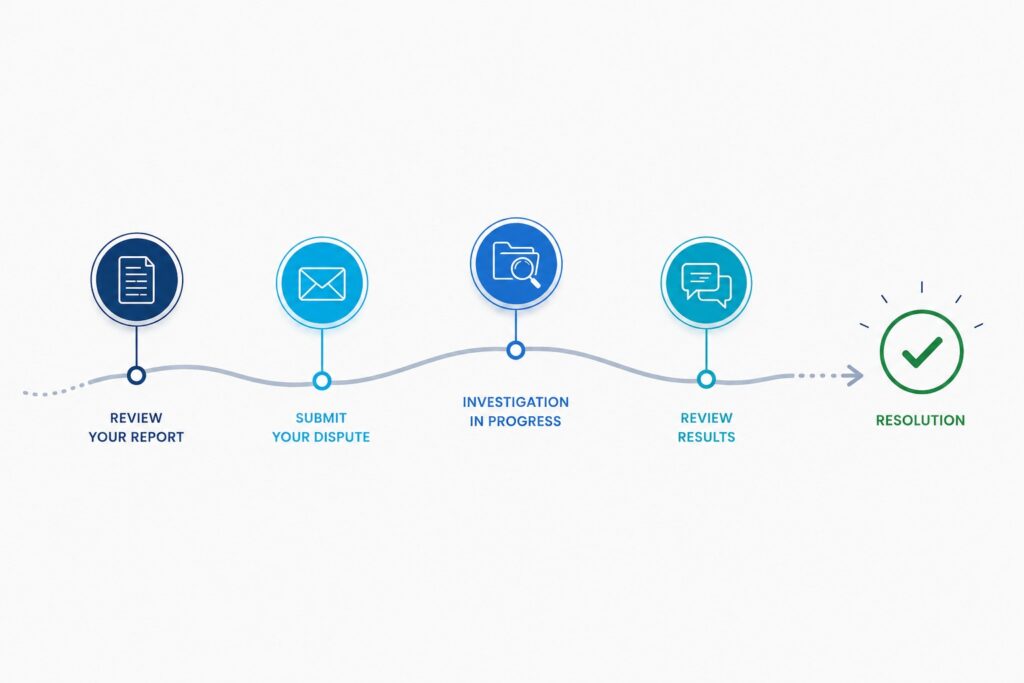
How Does the Dispute Process Work?
1. The Applicant Identifies the Disputed Information
The applicant reviews the report and identifies information believed to be inaccurate or incomplete.
2. The Applicant Submits a Dispute
The dispute is submitted to the consumer reporting agency, often by email, online portal, mail, or telephone.
When submitting a dispute, applicants should identify the specific information believed to be inaccurate, explain why it is incorrect, and include any supporting documentation that may help resolve the issue. Relevant documents may include court records, diplomas or transcripts, motor vehicle records, or other official records depending on the type of information being disputed.
3. A Reinvestigation Occurs
The screening company reviews the disputed information and may contact courts, employers, educational institutions, motor vehicle agencies, or other data sources as necessary.
4. The Results Are Communicated
If corrections are made, an updated report may be issued.
If information is verified as accurate, the report may remain unchanged.
How Long Does a Background Check Dispute Take?
Under the FCRA, reinvestigations generally must be completed within 30 days. This period may be extended to 45 days if the applicant submits additional information during the reinvestigation process.
Some disputes may be resolved more quickly, while others involving courts, government agencies, or manual verification processes may take longer.
Complex disputes involving multiple jurisdictions or incomplete documentation may also require additional time.
What Happens During the Hiring Process?
If an employer is considering making a negative hiring decision based on information in a background check, the FCRA generally requires the employer to provide:
- A pre-adverse action notice
- A copy of the report
- A Summary of Rights
This gives the applicant an opportunity to review the report and dispute inaccurate information before a final employment decision is made.
It is important to note that the FCRA does not require employers to pause or delay the hiring process while a dispute is being investigated. Applicants who submit a dispute during the hiring process should be aware that a final employment decision may still proceed on its own timeline.
The dispute process is one reason pre-adverse action procedures exist under the FCRA.
Can Accurate Information Be Removed?
Generally, no.
The dispute process is intended to address inaccurate or improperly reported information, not to remove truthful information simply because it may negatively affect employment opportunities.
However, there are situations where otherwise accurate information may still be restricted from reporting due to:
- State law limitations
- Expungement or sealing orders
- Reporting time limits
- Local hiring regulations
Because these rules vary by jurisdiction, reporting requirements may differ depending on location and position.
Common Misunderstandings
“Disputing a Background Check Automatically Removes the Record”
Not necessarily. Information verified as accurate may remain on the report.
“Only Criminal Records Can Be Disputed”
Applicants may dispute many types of employment screening information, including verifications and motor vehicle records.
“Employers Directly Change the Report”
In most cases, the consumer reporting agency handles the reinvestigation process.
“A Dispute Guarantees Employment”
The dispute process helps address report accuracy, but hiring decisions may still depend on multiple factors beyond the disputed information.
Final Thoughts
Background check disputes are an important part of the employment screening process because they help promote accuracy and fairness.
For applicants, understanding dispute rights can help address reporting errors before final hiring decisions are made.
For employers, following proper adverse action procedures and working with reputable screening providers helps support compliance and reduce risk during the hiring process.