
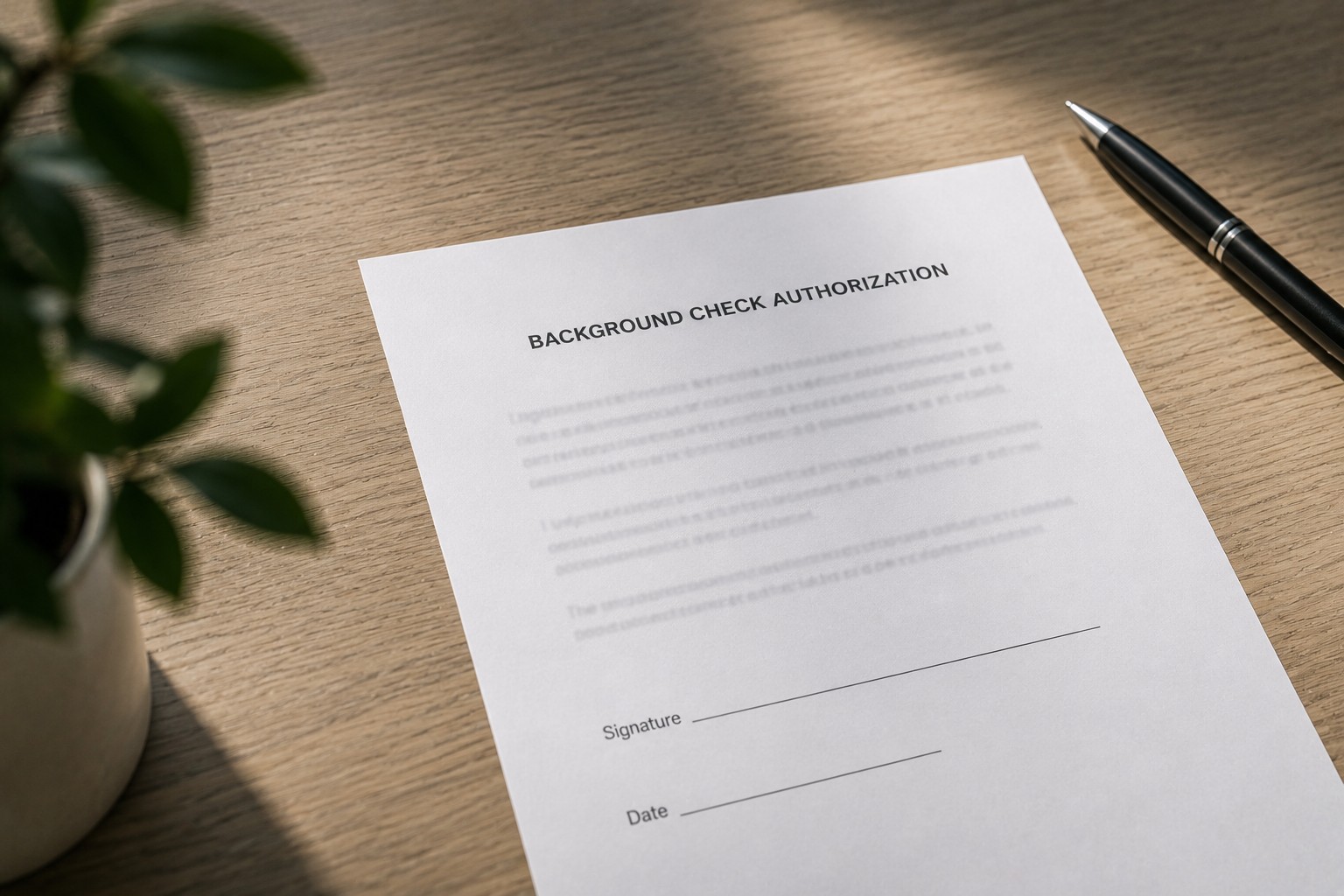
Employers and applicants alike often wonder whether a background check can legally be conducted without permission.
In most employment situations involving a third party screening company, employers generally must provide disclosure and obtain written authorization before ordering a background check under the Fair Credit Reporting Act (FCRA).
Understanding these requirements is important for both employers managing compliance obligations and applicants navigating the hiring process.
Do Employers Need Written Permission?
In most cases, yes.
Before ordering a background check through a third party screening company, employers are generally required to:
- Provide a clear disclosure
- Obtain written authorization from the applicant or employee
This requirement applies to many types of employment background checks, including:
- Criminal background checks
- Employment verifications
- Education verifications
- Credit reports
- Motor vehicle reports
- Professional license checks
The authorization process is designed to ensure applicants understand that a background check may be conducted for employment purposes.
What Is the FCRA?
The Fair Credit Reporting Act is a federal law that regulates how consumer reports may be obtained and used.
For employment purposes, the FCRA establishes rules involving:
- Disclosure requirements
- Written authorization
- Accuracy standards
- Adverse action procedures
- Applicant rights
When employers use a third party consumer reporting agency to conduct background screening, the FCRA often applies.
What Must Employers Disclose?
Employers generally must provide a standalone disclosure stating that a consumer report may be obtained for employment purposes.
The disclosure should be:
- Clear
- Conspicuous
- Separate from unrelated information
Importantly, the disclosure must not include extraneous information. The FCRA prohibits embedding the disclosure within a job application or combining it with other documents such as liability waivers. Courts and regulators have taken a strict view of this requirement.
What Counts as Authorization?
Authorization is typically obtained through a signed written consent form.
Today, many employers use electronic authorization forms completed through online applicant portals or onboarding systems.
Depending on the situation and applicable law, authorization may sometimes apply to:
- Initial hiring screening
- Ongoing employment screening
- Periodic re-screening programs
Employers should ensure their authorization process complies with applicable federal, state, and local requirements.
When Are Disclosure and Authorization Required?
In most employment situations involving a third party background screening company, employers generally should provide disclosure and obtain authorization before ordering a consumer report.
However, situations can become more complex depending on:
- Whether a third party screening company is involved
- The type of information being reviewed
- Whether screening occurs before or after hiring
- State or local law requirements
- Ongoing employee screening policies
- Government or security clearance investigations
Because these requirements may vary depending on the circumstances, employers should avoid assuming the same rules apply in every screening situation.
What Happens if an Employer Uses a Background Check to Deny Employment?
If an employer is considering making a negative hiring decision based in whole or in part on information contained in a consumer report, the FCRA generally requires the employer to follow the adverse action process.
This usually includes:
- Providing a pre-adverse action notice
- Providing a copy of the report
- Providing a Summary of Rights
- Allowing the applicant an opportunity to dispute inaccurate information
- Issuing a final adverse action notice if applicable
These procedures help provide applicants an opportunity to review and respond to report information before a final employment decision is made.
Are There State Law Differences?
Yes.
Some states and local jurisdictions impose additional requirements regarding:
- Disclosure language
- Authorization procedures
- Criminal history inquiries
- Credit report usage
- Timing of background checks
- Applicant notifications
Employers should ensure their screening practices comply with all applicable federal, state, and local laws.
Common Misunderstandings
“Employers Can Secretly Run Any Background Check They Want”
In many employment situations involving third party screening companies, disclosure and authorization are generally required.
“Signing an Application Automatically Gives Permission”
Not necessarily. The FCRA generally requires a standalone disclosure and authorization process.
“Background Checks Only Include Criminal Records”
Employment background checks may also include verifications, motor vehicle records, professional licenses, credit reports, and other screening components depending on the position.
“Current Employees Cannot Be Re-Screened”
Some employers maintain ongoing screening or periodic re-screening programs if proper authorization and policies are in place.
Final Thoughts
Background checks are now a routine part of the hiring process for many employers, but they are also subject to important legal requirements.
For employers, clear disclosure and authorization procedures are essential components of FCRA compliance.
For applicants, understanding when permission is required and how background reports may be used can help reduce confusion during the hiring process.
Related Articles
- Understanding the FCRA
- Understanding Pre-Adverse Action
- What Shows Up on a Background Check?
- What Is Considered a Failed Background Check?
- Can You Dispute a Background Check?
- AI Screening Tools and the FCRA
Employers should consult qualified legal counsel regarding their specific compliance obligations under
the FCRA and applicable state or local laws.