

Get Started Now
Home > Insights > Reference Checks vs. Employment Verifications: What’s the Difference?

Reference Checks vs. Employment Verifications: What’s the Difference?

Two tools. Different purposes. Knowing which tool to use, and when, can reduce hiring risk and improve your process.

Refernce Checks

When evaluating job candidates, employers often use the terms reference check and employment verification interchangeably. While both help validate information provided by applicants, they serve very different purposes.

Understanding the distinction can help employers make more informed hiring decisions and ensure they are obtaining the information they actually need.

What Is an Employment Verification?

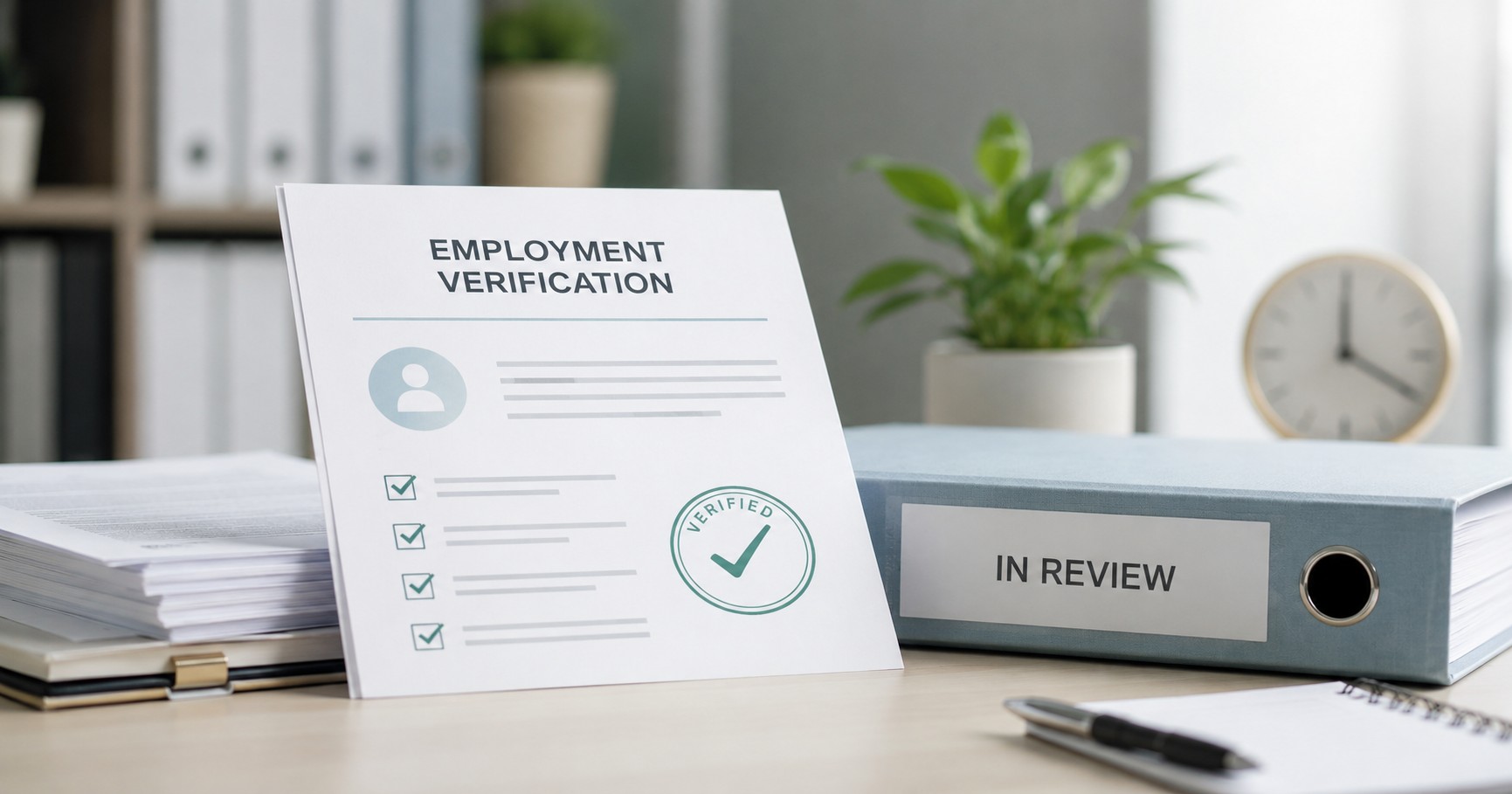
An employment verification is the process of confirming factual information about a candidate’s work history.

Typical information verified may include:

  • Employer name
  • Dates of employment
  • Position or job title
  • Employment status
  • Eligibility for rehire (when available)

The goal of an employment verification is to confirm that the information listed on a candidate’s application or résumé is accurate.

For example, if an applicant states they worked as a Project Manager at ABC Company from 2021 through 2025, an employment verification helps determine whether that information is correct.

Employment verifications focus on objective facts rather than opinions.

What Is a Reference Check?

A reference check involves speaking with individuals who can provide feedback about a candidate’s work performance, character, or professional abilities.

Questions commonly asked during a reference check include:

  • Was the candidate reliable?
  • How did they work with others?
  • What were their strengths?
  • What areas needed improvement?
  • Would you hire them again?

Unlike employment verifications, reference checks are subjective. The information provided is based on personal observations and experiences.

References may include former supervisors, coworkers, clients, or professional contacts. Some employers also request personal references, though professional references are generally more valuable when evaluating job-related performance.

Generally, employers may weigh reference feedback however they choose. If a reference expresses concern about a candidate’s reliability or says they would not hire that person again, an employer can factor that into their decision. Of course, references cannot knowingly provide false information.

The Key Difference: Facts vs. Opinions

The simplest way to understand the distinction is:

Employment Verification Reference Check
Confirms factual information Collects opinions and observations
Where someone worked How they performed
Dates of employment Work ethic and reliability
Job title Would someone recommend them?

Both can be useful, but they answer different questions.

Why Employers Often Need Employment Verifications

Many organizations have adopted policies limiting the information they provide about former employees. In some cases, employers will only confirm dates of employment and job title.

Because of these limitations, employment verifications have become an important part of the hiring process. They help employers confirm that candidates have accurately represented their work history, even when detailed performance information is unavailable.

Employment verifications can also identify discrepancies that may warrant further review, such as incorrect employment dates or omitted employers.

Many large employers now route verification requests through automated databases rather than handling them directly. The Work Number (TWN), operated by Equifax, is the most widely used of these. It allows credentialed requesters, including background screening companies, to obtain verified employment records instantly. When an employer participates, this can significantly speed up the verification process. However, accessing records through TWN comes with a fee, and those costs can be substantial, depending on the type of report requested.

Why Employers Perform Reference Checks

Reference checks can provide additional insight that may not be available through employment verifications alone.

A strong reference may help confirm that a candidate:

  • Demonstrates strong communication skills
  • Works well with others
  • Is dependable and professional
  • Possesses leadership abilities
  • Performed successfully in previous roles

However, employers should remember that references are typically selected by the candidate and may not always provide a complete picture.

Common Challenges with Reference Checks

Reference checks can be valuable, but they also present challenges.

Some references may be difficult to reach. Others may provide only limited information. In addition, feedback is often subjective and may vary significantly between individuals.

Many organizations also instruct managers to avoid discussing performance issues and instead refer all inquiries to Human Resources.

State laws also play a role. Many states have reference immunity statutes that protect employers who provide good-faith information about former employees, but the scope of that protection varies. In states where protections are narrower or less defined, employers often default to a minimal-disclosure policy to reduce legal exposure. This is one reason employment verifications have become more standardized as a hiring tool, since they confirm facts without relying on a former employer’s willingness to share.

As a result, reference checks may not always produce meaningful information.

Should Employers Conduct Both?

In many cases, the answer is yes.

Employment verifications and reference checks serve different purposes and can complement one another.

Employment verifications help confirm that a candidate’s work history is accurate. Reference checks may provide additional context regarding performance, professionalism, and workplace behavior.

For positions involving leadership responsibilities, financial authority, or sensitive information, employers often choose to conduct both.

Final Thoughts

Although the terms are sometimes used interchangeably, employment verifications and reference checks are not the same thing.

Employment verifications confirm objective facts about a candidate’s work history. Reference checks provide subjective feedback about a candidate’s performance and professional qualities.

Understanding the difference allows employers to gather the right information, reduce hiring risk, and make more informed hiring decisions.

At Candid Research, we provide employment verification services designed to help employers confirm candidate work history quickly, accurately, and professionally as part of a comprehensive background screening program.

Related Articles

This article is provided for general informational purposes only and is not intended as legal advice.
Employers should consult qualified legal counsel regarding their specific compliance obligations under
the FCRA and applicable state or local laws.
Continue Exploring View All Articles
Home > Insights > Dilute, Non-Negative, and Cancelled Drug Test Results Explained

Dilute, Non-Negative, and Cancelled Drug Test Results Explained

Why some drug test results require additional lab testing, MRO review, or specimen validity review before a final result is reported.

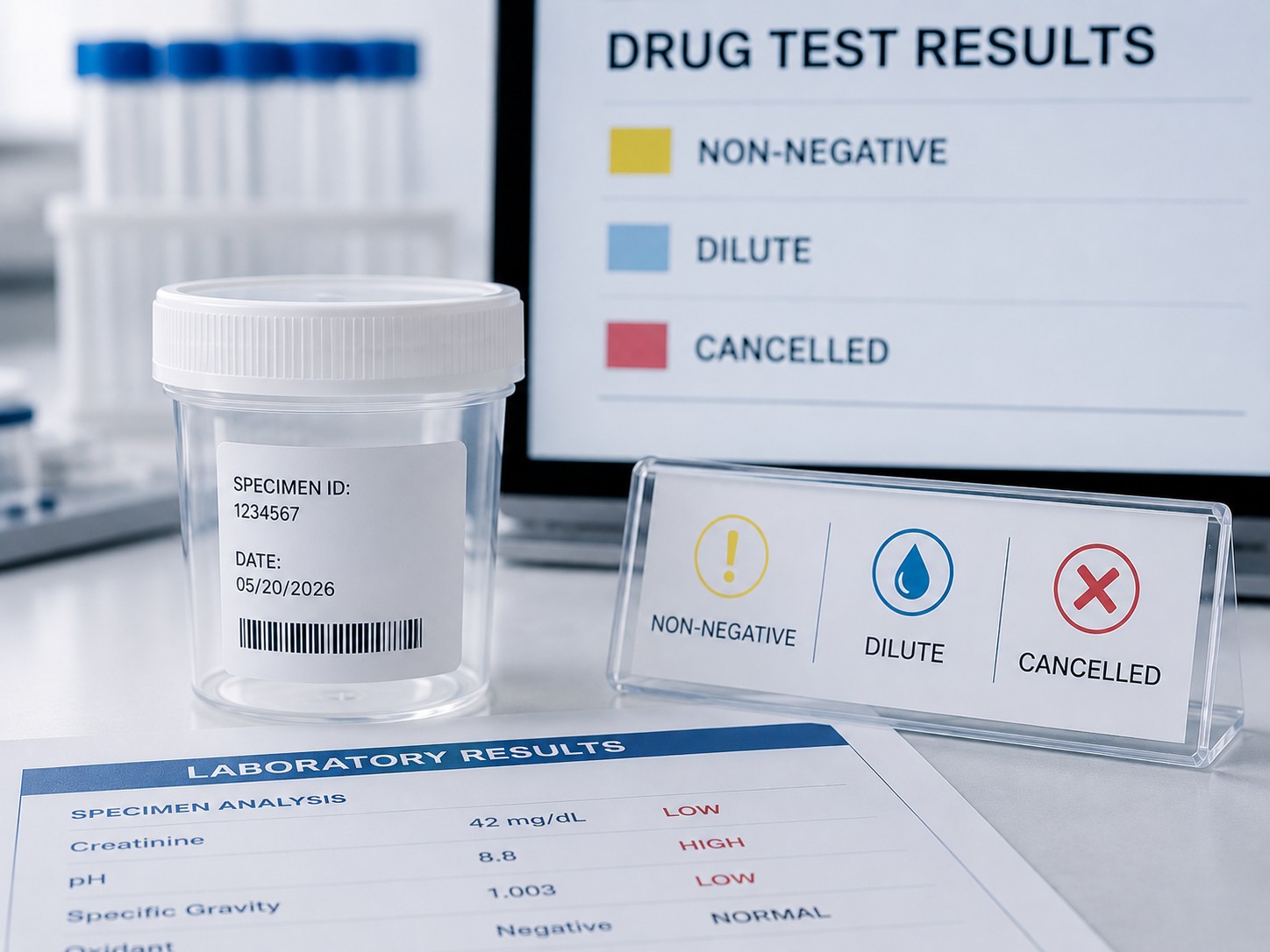
Drug Test Results

Drug test results are not always as simple as “negative” or “positive.”

In some situations, employers or applicants may receive results described as dilute, non-negative, cancelled, or pending Medical Review Officer (MRO) review. These results can create confusion, especially when a rapid test does not immediately return a final negative result.

Understanding what these terms mean can help employers and applicants better understand the drug testing process and why additional review or laboratory testing may sometimes be required.

What Does “Non-Negative” Mean?

A non-negative result does not automatically mean a person failed the drug test.

Instead, it generally means the initial screening detected something requiring additional laboratory confirmation and review.

Many rapid or instant drug tests are considered preliminary screening tools. If the initial result is not clearly negative, the specimen is often sent to a certified laboratory for confirmatory testing.

This additional review process helps improve accuracy and reduce the risk of false positive results.

Why Would a Rapid Drug Test Be Sent to the Lab?

Rapid tests are commonly used for convenience and speed, but they are not considered final confirmatory testing methods.

A rapid test may be sent to a laboratory when:

  • The result is non-negative
  • The test device produces an unclear result
  • Confirmation testing is required by employer policy
  • DOT or regulated testing rules apply
  • Specimen validity concerns exist
  • A Medical Review Officer review is required

Laboratory confirmation testing uses more sophisticated scientific methods designed to confirm or rule out the presence of specific substances.

What Is a Medical Review Officer?

A Medical Review Officer, often called an MRO, is a licensed physician specially trained to review laboratory drug test results.

The MRO’s role is to:

  • Review confirmed laboratory results
  • Contact the donor when necessary
  • Determine whether there may be a legitimate medical explanation
  • Verify final reportable results

For example, certain prescription medications may produce laboratory findings that require MRO review before a final result is reported to the employer.

MRO review is mandatory for all DOT-regulated drug testing. For non-DOT testing, MRO involvement may vary depending on employer policy and applicable requirements. Employers subject to DOT regulations should be aware that their compliance obligations differ from standard workplace testing programs.

This process helps promote accuracy, fairness, and confidentiality.

What Does “Dilute” Mean?

A dilute result means the urine specimen contained more water and lower concentrations of normal substances than expected.

This may occur for many reasons, including:

  • High fluid intake
  • Hydration before testing
  • Natural biological variation
  • Medical conditions
  • Other specimen collection factors

Dilute results are not automatically positive or negative.

What Is a Negative Dilute Result?

A negative dilute result means:

  • No drugs were detected above testing thresholds
  • The specimen showed signs of dilution

Some employers may accept negative dilute results as final. Others may require a retest depending on company policy, industry requirements, or applicable regulations.

Under DOT regulations, a negative dilute result may trigger a mandatory recollection depending on the creatinine level of the original specimen. Employers subject to DOT requirements should follow applicable federal guidelines rather than standard workplace testing policies.

What Is a Positive Dilute Result?

A positive dilute result means:

  • Drugs or metabolites were confirmed above reporting thresholds
  • The specimen also showed signs of dilution

These situations may still require standard MRO review procedures before final reporting.

What Does “Cancelled” Mean?

A cancelled test means the laboratory or MRO could not report a final result from the specimen provided.

Cancelled results may occur for several reasons, including:

  • Insufficient specimen volume
  • Specimen leakage or shipping damage
  • Laboratory processing issues
  • Invalid specimen results
  • Specimen validity concerns
  • Testing interference

A cancelled test does not automatically mean the donor attempted to tamper with the specimen.

In many cases, the employer may simply require recollection.

It is also worth noting that cancelled tests are generally still billable. Laboratory processing, specimen handling, and administrative review occur regardless of whether a final result is reported. Employers should not assume that a cancelled result means the test was not conducted or that associated fees will not apply.

What Does “Cancelled Due to Abnormal pH” Mean?

Urine specimens are tested for certain validity indicators, including pH levels.

An abnormal pH result may indicate the specimen fell outside expected biological ranges.

Possible causes may include:

  • Chemical contamination
  • Specimen adulteration
  • Collection or storage issues
  • Certain medical or environmental factors

Depending on the circumstances, the laboratory or MRO may cancel the test and recommend recollection.

What Does “Cancelled Due to Creatinine” Mean?

Creatinine is a naturally occurring waste product normally present in urine.

Very low creatinine levels may indicate an unusually dilute specimen.

When creatinine or related specimen validity markers fall outside acceptable ranges, the laboratory may determine the specimen is not suitable for reporting and cancel the test.

Additional testing or recollection may sometimes be required.

Why Do Some Drug Test Results Take Longer?

Drug testing timelines vary depending on:

  • Type of test performed
  • Laboratory confirmation requirements
  • MRO review status
  • Specimen validity testing
  • Shipping and laboratory processing times
  • Employer reporting procedures

A rapid negative result may sometimes be available quickly, while non-negative or validity-related results may require additional review before a final result can be released.

Common Misunderstandings

“Non-Negative Means Positive”

Not necessarily. Non-negative generally means additional confirmation testing or review is required.

“Dilute Means Someone Tried to Cheat the Test”

Not always. Dilution can occur for many reasons, including normal hydration.

“Cancelled Means the Person Failed”

No. Cancelled tests often involve technical or specimen validity issues rather than confirmed drug findings.

“Rapid Tests Are Always Final”

Rapid tests are preliminary screening tools and may require laboratory confirmation depending on the result.

Important: Non-negative, dilute, and cancelled drug test results often require additional laboratory review, specimen validity testing, or Medical Review Officer evaluation before a final result can be reported.

Final Thoughts

Drug testing involves multiple scientific and review processes designed to promote accuracy, fairness, and compliance.

Results such as dilute, non-negative, or cancelled do not always indicate drug use or policy violations, but they may require additional laboratory analysis or MRO review before final reporting.

For employers, understanding these result types can help reduce confusion during the hiring process.

For applicants, understanding why a result may be delayed or require additional review can help provide important context during screening.

Related Articles

This article is provided for general informational purposes only and is not intended as legal advice.
Employers should consult qualified legal counsel regarding their specific compliance obligations under
the FCRA and applicable state or local laws.
Continue Exploring View All Articles
Home > Insights > Can You Dispute a Background Check?

Can You Dispute a Background Check?

What applicants and employers should know about disputing inaccurate or incomplete background check information.

Dispute

Yes. If you believe information in a background check is inaccurate or incomplete, you generally have the right to dispute it.

Under the Fair Credit Reporting Act (FCRA), consumer reporting agencies that prepare employment background checks must maintain procedures to help ensure maximum possible accuracy. When incorrect information appears in a report, applicants may request a reinvestigation of the disputed information.

Understanding how the dispute process works is important for both applicants and employers involved in employment screening decisions.

What Types of Errors Can Be Disputed?

Background check disputes often involve information that is inaccurate, incomplete, outdated, or improperly matched to the applicant.

  • Criminal records belonging to another person
  • Incorrect case dispositions
  • Duplicate records
  • Expunged or sealed records reported improperly
  • Incorrect employment verification results
  • Incorrect education verification information
  • Motor vehicle record inaccuracies
  • Identity or address mismatches

Not every dispute involves identity theft or major reporting errors. Even small inaccuracies can affect hiring decisions if not corrected.

Who Handles the Dispute?

In most employment screening situations, the dispute is handled by the consumer reporting agency that prepared the report. The employer usually does not have the ability to directly change report information themselves. For this reason, applicants should direct disputes to the consumer reporting agency, not the employer.

The consumer reporting agency may:

  • Review the disputed information
  • Contact data providers or courts if necessary
  • Reinvestigate the reported information
  • Correct or update information when appropriate
  • Issue updated reports if changes are made

The exact dispute procedures may vary depending on the type of information involved.

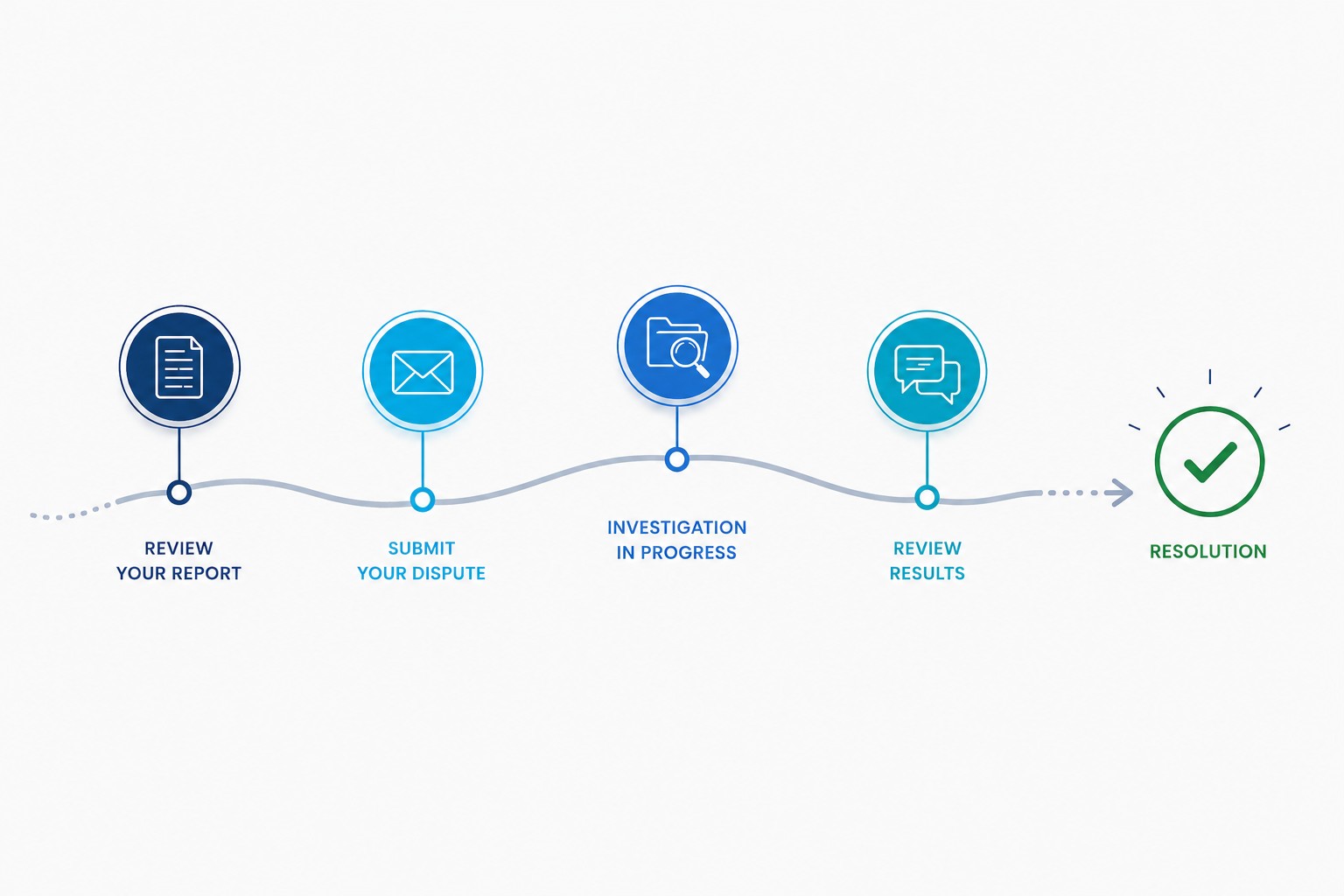
How Does the Dispute Process Work?

1. The Applicant Identifies the Disputed Information

The applicant reviews the report and identifies information believed to be inaccurate or incomplete.

2. The Applicant Submits a Dispute

The dispute is submitted to the consumer reporting agency, often by email, online portal, mail, or telephone.

When submitting a dispute, applicants should identify the specific information believed to be inaccurate, explain why it is incorrect, and include any supporting documentation that may help resolve the issue. Relevant documents may include court records, diplomas or transcripts, motor vehicle records, or other official records depending on the type of information being disputed.

3. A Reinvestigation Occurs

The screening company reviews the disputed information and may contact courts, employers, educational institutions, motor vehicle agencies, or other data sources as necessary.

4. The Results Are Communicated

If corrections are made, an updated report may be issued.

If information is verified as accurate, the report may remain unchanged.

How Long Does a Background Check Dispute Take?

Under the FCRA, reinvestigations generally must be completed within 30 days. This period may be extended to 45 days if the applicant submits additional information during the reinvestigation process.

Some disputes may be resolved more quickly, while others involving courts, government agencies, or manual verification processes may take longer.

Complex disputes involving multiple jurisdictions or incomplete documentation may also require additional time.

What Happens During the Hiring Process?

If an employer is considering making a negative hiring decision based on information in a background check, the FCRA generally requires the employer to provide:

  • A pre-adverse action notice
  • A copy of the report
  • A Summary of Rights

This gives the applicant an opportunity to review the report and dispute inaccurate information before a final employment decision is made.

It is important to note that the FCRA does not require employers to pause or delay the hiring process while a dispute is being investigated. Applicants who submit a dispute during the hiring process should be aware that a final employment decision may still proceed on its own timeline.

The dispute process is one reason pre-adverse action procedures exist under the FCRA.

Can Accurate Information Be Removed?

Generally, no.

The dispute process is intended to address inaccurate or improperly reported information, not to remove truthful information simply because it may negatively affect employment opportunities.

However, there are situations where otherwise accurate information may still be restricted from reporting due to:

  • State law limitations
  • Expungement or sealing orders
  • Reporting time limits
  • Local hiring regulations

Because these rules vary by jurisdiction, reporting requirements may differ depending on location and position.

Common Misunderstandings

“Disputing a Background Check Automatically Removes the Record”

Not necessarily. Information verified as accurate may remain on the report.

“Only Criminal Records Can Be Disputed”

Applicants may dispute many types of employment screening information, including verifications and motor vehicle records.

“Employers Directly Change the Report”

In most cases, the consumer reporting agency handles the reinvestigation process.

“A Dispute Guarantees Employment”

The dispute process helps address report accuracy, but hiring decisions may still depend on multiple factors beyond the disputed information.

Important: Applicants generally have the right to dispute inaccurate or incomplete information contained in employment background reports prepared by consumer reporting agencies.

Final Thoughts

Background check disputes are an important part of the employment screening process because they help promote accuracy and fairness.

For applicants, understanding dispute rights can help address reporting errors before final hiring decisions are made.

For employers, following proper adverse action procedures and working with reputable screening providers helps support compliance and reduce risk during the hiring process.

Related Articles

This article is provided for general informational purposes only and is not intended as legal advice.
Employers should consult qualified legal counsel regarding their specific compliance obligations under
the FCRA and applicable state or local laws.
Continue Exploring View All Articles
Home > Insights > Do Employers Need Permission to Run a Background Check?

Do Employers Need Permission to Run a Background Check?

When employers need authorization for background checks and what the FCRA requires.

Permission

Employers and applicants alike often wonder whether a background check can legally be conducted without permission.

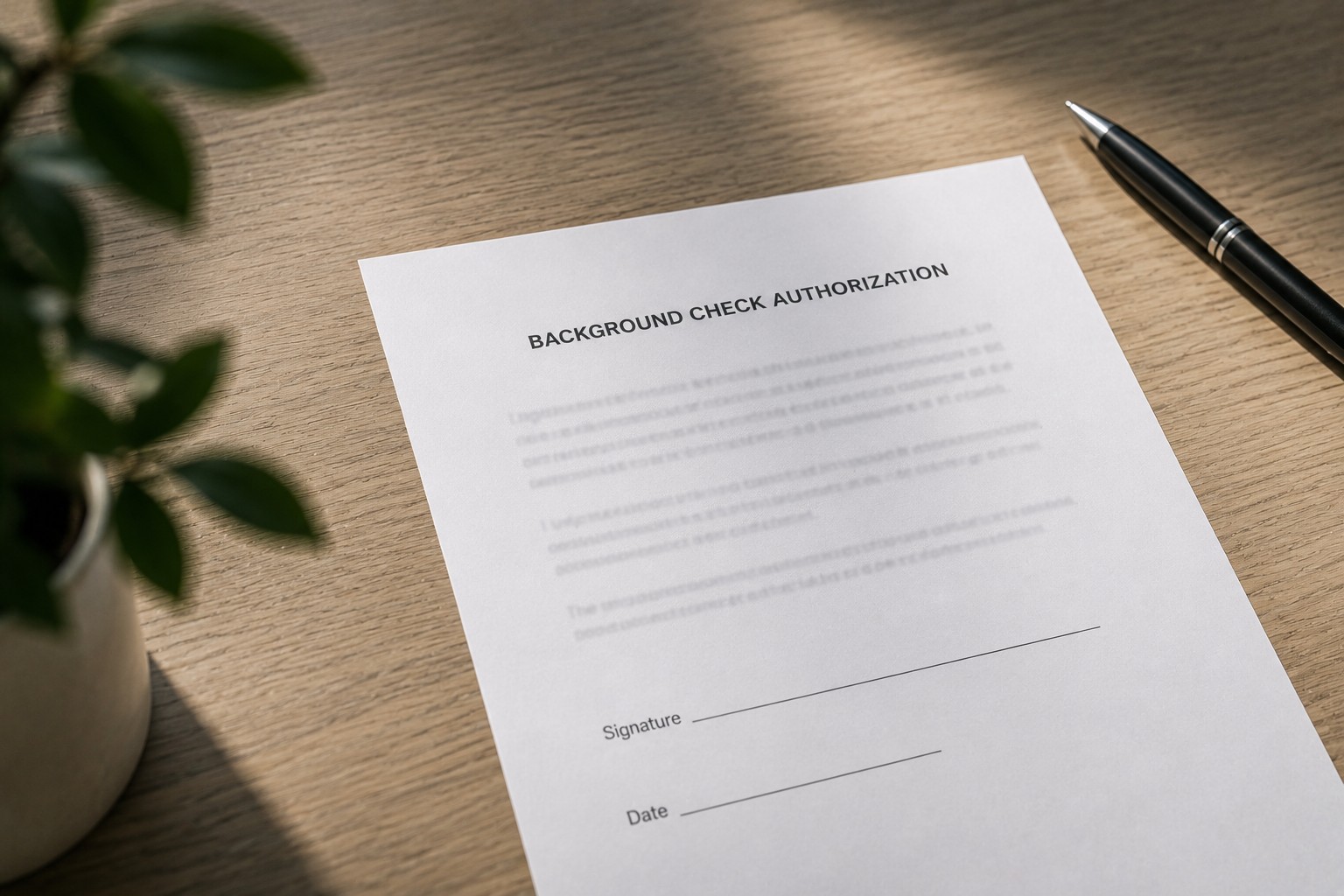
In most employment situations involving a third party screening company, employers generally must provide disclosure and obtain written authorization before ordering a background check under the Fair Credit Reporting Act (FCRA).

Understanding these requirements is important for both employers managing compliance obligations and applicants navigating the hiring process.

Do Employers Need Written Permission?

In most cases, yes.

Before ordering a background check through a third party screening company, employers are generally required to:

  • Provide a clear disclosure
  • Obtain written authorization from the applicant or employee

This requirement applies to many types of employment background checks, including:

  • Criminal background checks
  • Employment verifications
  • Education verifications
  • Credit reports
  • Motor vehicle reports
  • Professional license checks

The authorization process is designed to ensure applicants understand that a background check may be conducted for employment purposes.

What Is the FCRA?

The Fair Credit Reporting Act is a federal law that regulates how consumer reports may be obtained and used.

For employment purposes, the FCRA establishes rules involving:

  • Disclosure requirements
  • Written authorization
  • Accuracy standards
  • Adverse action procedures
  • Applicant rights

When employers use a third party consumer reporting agency to conduct background screening, the FCRA often applies.

What Must Employers Disclose?

Employers generally must provide a standalone disclosure stating that a consumer report may be obtained for employment purposes.

The disclosure should be:

  • Clear
  • Conspicuous
  • Separate from unrelated information

Importantly, the disclosure must not include extraneous information. The FCRA prohibits embedding the disclosure within a job application or combining it with other documents such as liability waivers. Courts and regulators have taken a strict view of this requirement.

What Counts as Authorization?

Authorization is typically obtained through a signed written consent form.

Today, many employers use electronic authorization forms completed through online applicant portals or onboarding systems.

Depending on the situation and applicable law, authorization may sometimes apply to:

  • Initial hiring screening
  • Ongoing employment screening
  • Periodic re-screening programs

Employers should ensure their authorization process complies with applicable federal, state, and local requirements.

When Are Disclosure and Authorization Required?

In most employment situations involving a third party background screening company, employers generally should provide disclosure and obtain authorization before ordering a consumer report.

However, situations can become more complex depending on:

  • Whether a third party screening company is involved
  • The type of information being reviewed
  • Whether screening occurs before or after hiring
  • State or local law requirements
  • Ongoing employee screening policies
  • Government or security clearance investigations

Because these requirements may vary depending on the circumstances, employers should avoid assuming the same rules apply in every screening situation.

What Happens if an Employer Uses a Background Check to Deny Employment?

If an employer is considering making a negative hiring decision based in whole or in part on information contained in a consumer report, the FCRA generally requires the employer to follow the adverse action process.

This usually includes:

  • Providing a pre-adverse action notice
  • Providing a copy of the report
  • Providing a Summary of Rights
  • Allowing the applicant an opportunity to dispute inaccurate information
  • Issuing a final adverse action notice if applicable

These procedures help provide applicants an opportunity to review and respond to report information before a final employment decision is made.

Are There State Law Differences?

Yes.

Some states and local jurisdictions impose additional requirements regarding:

  • Disclosure language
  • Authorization procedures
  • Criminal history inquiries
  • Credit report usage
  • Timing of background checks
  • Applicant notifications

Employers should ensure their screening practices comply with all applicable federal, state, and local laws.

Common Misunderstandings

“Employers Can Secretly Run Any Background Check They Want”

In many employment situations involving third party screening companies, disclosure and authorization are generally required.

“Signing an Application Automatically Gives Permission”

Not necessarily. The FCRA generally requires a standalone disclosure and authorization process.

“Background Checks Only Include Criminal Records”

Employment background checks may also include verifications, motor vehicle records, professional licenses, credit reports, and other screening components depending on the position.

“Current Employees Cannot Be Re-Screened”

Some employers maintain ongoing screening or periodic re-screening programs if proper authorization and policies are in place.

Important: Generally, employers must provide a stand-alone disclosure and obtain written authorization before requesting employment background checks through a third party consumer reporting agency..

Final Thoughts

Background checks are now a routine part of the hiring process for many employers, but they are also subject to important legal requirements.

For employers, clear disclosure and authorization procedures are essential components of FCRA compliance.

For applicants, understanding when permission is required and how background reports may be used can help reduce confusion during the hiring process.

Related Articles

This article is provided for general informational purposes only and is not intended as legal advice.
Employers should consult qualified legal counsel regarding their specific compliance obligations under
the FCRA and applicable state or local laws.

Continue Exploring View All Articles
Home > Insights > AI Screening Tools and the FCRA: What Employers Need to Know

AI Screening Tools and the FCRA: What Employers Need to Know

How AI hiring tools may intersect with FCRA requirements, accuracy standards, adverse action, and employer compliance obligations.

AI Screening

As artificial intelligence tools become more common in hiring, many employers are exploring automated systems to help screen applicants, review resumes, evaluate interviews, or identify potential hiring risks.

While these technologies may improve efficiency, they can also create significant compliance concerns under the Fair Credit Reporting Act (FCRA) and other employment laws.

Employers using AI driven hiring tools should understand how these systems work, when the FCRA may apply, and why human oversight remains important throughout the screening process.

What Are AI Screening Tools?

AI screening tools generally refer to software systems that use automation, algorithms, machine learning, or predictive analysis to assist with hiring decisions.

These tools may help employers:

  • Review resumes
  • Rank applicants
  • Analyze interview responses
  • Evaluate qualifications
  • Identify hiring patterns
  • Flag potential concerns
  • Automate portions of the screening process

Some AI systems are built directly into applicant tracking systems, while others are offered through third party vendors.

Does the FCRA Apply to AI Screening Tools?

In many situations, yes.

The FCRA may apply when an employer uses a third party company to provide information, recommendations, evaluations, or reports used for employment purposes.

This includes certain AI powered screening platforms if they are providing information that helps determine a person’s eligibility for employment.

Regulators have already weighed in on this. In 2024, the Consumer Financial Protection Bureau issued guidance specifically addressing how AI driven hiring tools may trigger FCRA obligations. The guidance noted that AI vendors collecting data from multiple sources to generate worker assessments or algorithmic scores may qualify as consumer reporting agencies under the FCRA, which would subject both the vendor and the employer to the law’s full compliance requirements.

Whether the FCRA applies in a specific situation depends on several factors, including:

  • The source of the information
  • How the data is collected
  • Whether a third party vendor is involved
  • How the information is used in hiring decisions
  • Whether the tool qualifies as a consumer reporting agency under the FCRA

Employers should not assume that AI based hiring tools fall outside traditional compliance obligations.

Why AI Screening Creates Compliance Concerns

AI tools may create compliance risks when employers rely too heavily on automated systems without understanding how decisions are being generated.

Potential concerns may include:

  • Inaccurate or outdated information
  • Lack of transparency
  • Inconsistent evaluation standards
  • Discriminatory impact
  • Automated decision making without human review
  • Use of unverifiable data sources
  • Improper adverse action procedures

In some cases, employers may not fully understand what information the system is analyzing or how candidates are being scored.

Human Oversight Still Matters

One of the biggest misconceptions surrounding AI hiring tools is the belief that automation eliminates the need for human review.

It does not.

Even when AI systems assist with screening, employers remain responsible for ensuring hiring decisions are lawful, job related, and compliant with applicable regulations.

Human oversight remains important for:

  • Reviewing flagged results
  • Verifying report accuracy
  • Evaluating context
  • Applying consistent standards
  • Conducting individualized assessments
  • Following required adverse action procedures

AI tools may assist decision making, but they should not replace responsible hiring practices.

Accuracy and Maximum Possible Accuracy

The FCRA requires consumer reporting agencies to follow reasonable procedures to assure maximum possible accuracy of the information being reported.

This becomes especially important when automated systems are involved.

If AI tools rely on incomplete databases, improperly matched records, outdated information, or unsupported assumptions, employers may face increased compliance risks.

Employers should understand:

  • Where information originates
  • Whether records are verified
  • How disputes are handled
  • Whether human review exists within the process
  • What quality control measures are in place

Automation does not eliminate the responsibility to ensure information is accurate and properly evaluated.

Adverse Action Requirements Still Apply

If an employer uses information from a consumer report to make a negative employment decision, the FCRA’s adverse action procedures may still apply, even when AI systems are involved.

This generally includes:

  • Providing a pre adverse action notice
  • Providing a copy of the report
  • Providing a Summary of Rights
  • Allowing the applicant an opportunity to dispute inaccuracies
  • Issuing a final adverse action notice, if applicable

Employers should avoid assuming that automated systems remove or simplify these legal obligations.

AI Bias and Emerging Regulations

AI hiring tools are receiving increasing attention from regulators at the federal, state, and local levels, and several laws are already in effect.

NYC Local Law 144 requires employers to obtain an independent bias audit before using any automated employment decision tool, with audits renewed annually and results disclosed publicly.

Illinois amended its Human Rights Act effective January 1, 2026, prohibiting employers from using AI in ways that produce discriminatory effects and requiring notice to candidates when AI is used in hiring decisions.

Colorado’s law, taking effect June 30, 2026, covers high-risk AI systems used in employment and requires impact assessments and consumer notification.

Across jurisdictions, regulatory focus has centered on:

  • Automated employment decision tools
  • AI bias audits
  • Transparency requirements
  • Candidate notification obligations
  • Algorithmic accountability standards

This is an active and fast-moving area of law. Employers using AI in hiring should monitor developments closely and not treat compliance as a future concern.

Questions Employers Should Ask AI Vendors

Before implementing AI based hiring or screening tools, employers should understand how the technology operates and what compliance protections exist.

Important questions may include:

  • What data sources are being used?
  • How is information verified?
  • Is human review involved?
  • How are disputes handled?
  • Does the system create explainable results?
  • Has the tool been evaluated for discriminatory impact?
  • What FCRA compliance measures are built into the process?

Employers should avoid relying on vague marketing claims about automation, accuracy, or bias free decision making.

Common Employer Misunderstandings

“AI Hiring Tools Automatically Reduce Bias”

Not necessarily. AI systems may still create discriminatory outcomes depending on the data, design, or evaluation criteria involved.

“Automation Eliminates Compliance Obligations”

No. Employers remain responsible for complying with the FCRA and other employment laws even when automated systems are used.

“AI Decisions Are Always Objective”

AI systems are only as reliable as the data, programming, assumptions, and oversight behind them.

“If a Vendor Handles It, the Employer Has No Liability”

Employers may still face liability for how screening information is used during the hiring process.

Important: Using AI in hiring does not eliminate FCRA obligations. Employers remain responsible for ensuring screening practices are accurate, lawful, consistent, and properly reviewed by humans when necessary.

Final Thoughts

AI based hiring and screening tools are likely to become increasingly common, but automation does not replace compliance responsibilities.

Employers using AI systems should understand how screening decisions are generated, what information is being analyzed, and whether appropriate safeguards exist to ensure fairness, accuracy, transparency, and legal compliance.

The regulatory landscape around AI in hiring is no longer hypothetical. Employers should treat compliance as an immediate operational concern, not a future one.

Related Articles

This article is provided for general informational purposes only and is not intended as legal advice.
Employers should consult qualified legal counsel regarding their specific compliance obligations under
the FCRA and applicable state or local laws.
Continue Exploring View All Articles
Home > Insights > Does a Credit Report Show Up on a Background Check?

Does a Credit Report Show Up on a Background Check?

When may a credit report be included in a background check and what employers and applicants should understand.

Credit Report

When applicants hear the term “background check,” many immediately wonder whether their credit report will be included.

The answer depends on the type of screening being ordered and the position involved.

In many cases, a standard employment background check does not include a credit report. However, some employers may request credit history information for certain positions involving financial responsibility, access to sensitive information, or fiduciary duties.

Are Credit Reports Automatically Included in Background Checks?

No. Credit reports are not automatically included in most employment background checks.

Many standard employment background checks focus on areas such as:

  • Criminal records
  • Employment verifications
  • Education verifications
  • Identity and address history
  • Motor vehicle records
  • Professional licenses

A credit report is typically a separate screening component that must be specifically requested by the employer.

When Might an Employer Request a Credit Report?

Employers may request a credit report when hiring for positions involving financial responsibility, access to company funds, sensitive financial data, or fiduciary duties.

Examples may include roles in:

  • Accounting
  • Finance
  • Banking
  • Payroll
  • Executive leadership
  • Positions involving access to company funds
  • Government or security sensitive roles

The purpose is generally not to evaluate a person’s wealth or income. Instead, employers may review credit related information as part of an overall risk assessment for positions involving financial trust.

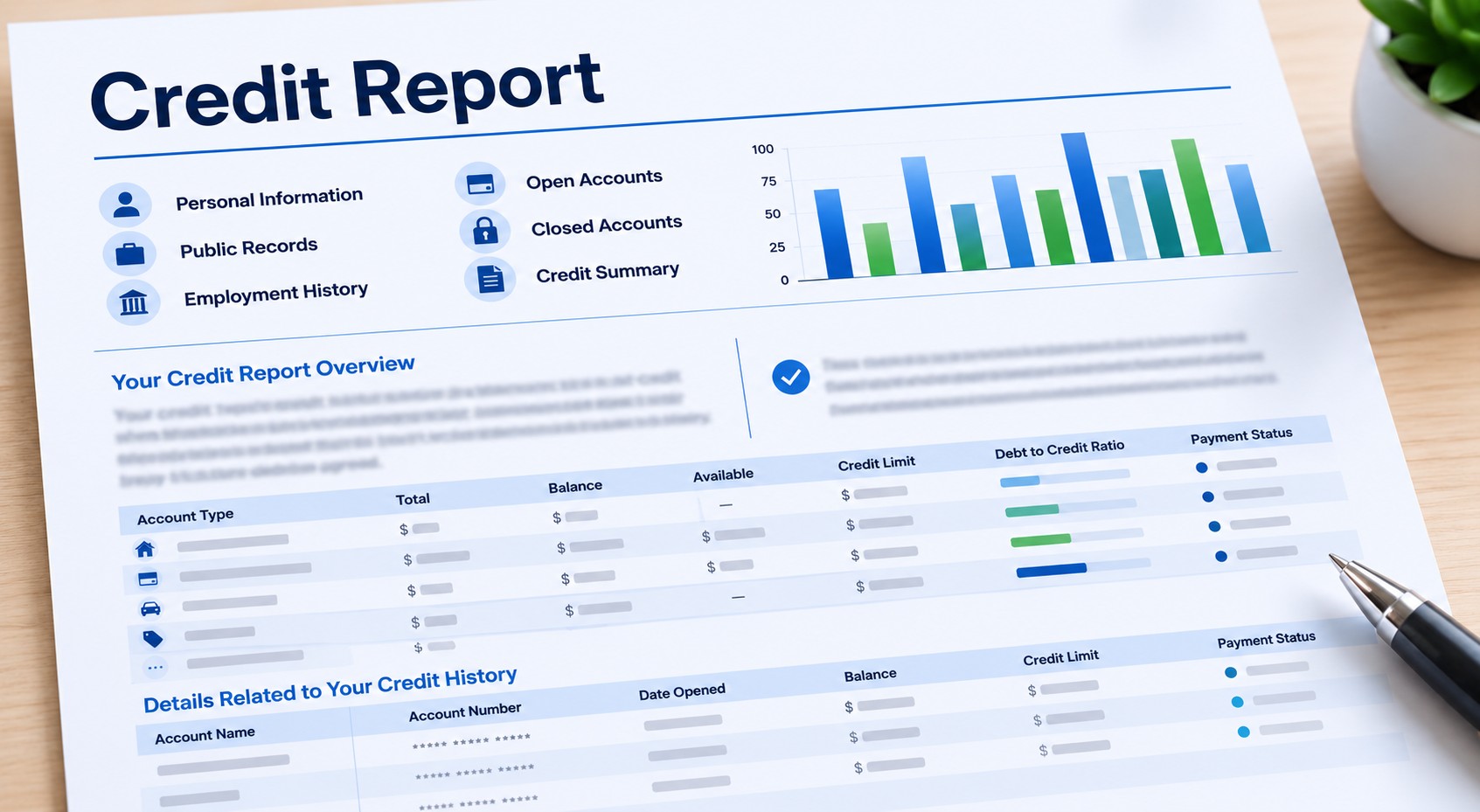
What Does an Employment Credit Report Show?

An employment credit report is different from the version a consumer may see when applying for a loan, credit card, or mortgage.

Employment credit reports may include information such as:

  • Outstanding debts
  • Payment history
  • Collection accounts
  • Bankruptcies
  • Foreclosures
  • Account status information

The information provided is usually more limited than a lending related credit report.

Can Employers See Your Credit Score?

Generally, no. Employment credit reports typically do not include a credit score.

Employers are usually reviewing broader financial patterns or reportable credit history information rather than a numerical score.

Do Employers Need Permission to Run a Credit Check?

Yes. Employers must obtain written authorization before requesting a credit report for employment purposes.

Under the Fair Credit Reporting Act, employers must provide a standalone written disclosure and obtain written authorization before ordering a consumer report, including an employment credit report. The disclosure must be a separate document and cannot be buried within a job application or other materials.

If an employer is considering taking adverse action based on information in the report, the employer must also follow the required adverse action process.

Do All States Allow Employment Credit Checks?

No. At least 11 states restrict or limit when employers may use credit reports for employment purposes, including California, Illinois, Colorado, and Oregon, among others. Major cities such as Chicago, Philadelphia, and Washington D.C. have enacted similar local restrictions. New York State went further than most, prohibiting employers from requesting or using consumer credit history for employment decisions as of April 18, 2026, with only narrow exemptions. Notably, the law also restricts background screening agencies from providing credit history information to employers unless an exemption applies.

Because these rules vary by jurisdiction, employers should review applicable federal, state, and local requirements before ordering employment credit reports.

Will Bad Credit Prevent Someone From Getting Hired?

Not necessarily. A credit report alone does not automatically disqualify an applicant from employment.

Employers typically evaluate background screening information in relation to the position, the nature of the information, the job duties involved, and applicable laws.

If an employer is considering a hiring decision based in whole or in part on information from a background report, the employer must follow applicable adverse action procedures before making a final decision.

Important Distinction

A standard employment background check and an employment credit report are not the same thing.

Many background checks do not include any credit related information unless the employer specifically requests it and obtains the proper authorization.

Important: Credit reports are not automatically included in most employment background checks. They are typically separate screening components used only for certain positions and subject to specific legal requirements.

Final Thoughts

Credit reports can be part of an employment background screening process, but they are typically used only for certain positions and under specific legal requirements.

For employers, it is important to ensure that credit checks are job related, legally compliant, and applied consistently.

For applicants, understanding what employment credit reports do and do not contain can help reduce confusion during the hiring process.

Related Articles

This article is provided for general informational purposes only and is not intended as legal advice.
Employers should consult qualified legal counsel regarding their specific compliance obligations under
the FCRA and applicable state or local laws.
Continue Exploring View All Articles
Home > Insights > Employment Verifications Explained

Employment Verifications Explained

Understanding employment verification delays, The Work Number, payroll providers, and why some verifications take longer than expected.

Employment Verifications

Employment verifications are a routine part of background screening, but they are often the most time-consuming and unpredictable component of the process. Unlike automated database searches, verifications frequently depend on human response times, third-party systems, and records that are not always easy to access.

Understanding how employment verifications work, what causes delays, and how systems like The Work Number fit into the process can help employers set realistic expectations and make more informed decisions throughout the hiring process.

What Is an Employment Verification?

An employment verification confirms information about an applicant’s work history as reported on their application or resume.

Verified information typically includes:

  • Employer name
  • Dates of employment
  • Job title or position
  • Employment status (full-time, part-time, contract)
  • Eligibility for rehire
  • Salary or compensation (when authorized and legally permissible)

The amount of information an employer will release varies. Many organizations, out of caution around privacy and liability, confirm only dates of employment and job title. Others provide more detail depending on internal policy and applicable state laws.

Employment verifications are most commonly used during pre-employment screening, but they also appear in credentialing, licensing, financial applications, and ongoing workforce compliance programs.

Why Employers Use Employment Verifications

Employment verifications help employers evaluate whether an applicant’s work history is accurate and consistent with the information provided during the hiring process.

Verifications may identify:

  • Fabricated employment history
  • Inflated job titles
  • Incorrect dates of employment
  • Employment gaps
  • Inconsistencies between application and employer records

For certain roles, employment history is tied directly to experience requirements, licensing qualifications, or regulatory standards. In those cases, an accurate verification is not just useful, it is necessary.

Employment verifications are typically run alongside criminal background checks, education verifications, and other screening components as part of a complete pre-employment review.

What Is The Work Number?

The Work Number (commonly referred to as TWN) is an automated employment and income verification database operated by Equifax. It is one of the largest systems of its kind in the United States.

Many large employers, particularly those that use third-party payroll providers, route all verification requests through The Work Number rather than handling them internally. When a background screening company queries TWN, they can retrieve employment data electronically without contacting the employer’s HR department directly.

Information available through The Work Number may include:

  • Employer name
  • Employment dates
  • Job status
  • Income and payroll information

The system is widely used because it reduces administrative burden on HR teams while standardizing how verification responses are delivered.

Why Employers Use The Work Number

Large employers can receive thousands of verification requests each year. Managing those requests manually is time-consuming and creates meaningful strain on HR departments that are already handling hiring, onboarding, compliance, and employee relations.

Automated systems like The Work Number help employers:

  • Reduce the volume of inbound verification calls and emails
  • Standardize how employment data is disclosed
  • Limit the risk of inconsistent or unauthorized responses
  • Process verifications more efficiently at scale

As a result, background screening companies often work through TWN or similar platforms rather than reaching employers directly. This is increasingly the norm, not the exception.

Why Employment Verifications Cost More

Employment verifications are generally more expensive than criminal background searches, and for good reason.

Criminal searches typically involve querying court databases or compiled records. Employment verifications, by contrast, often require manual outreach, multiple follow-up attempts, and in many cases, access fees charged by third-party verification systems.

When an employer routes verifications through a platform like The Work Number, the screening company must pay to access those records. Those fees can be substantial and are separate from the labor involved in managing the verification process.

Cost factors typically include:

  • Manual contact with employers or HR departments
  • Multiple outreach attempts by phone and email
  • Waiting periods outside the screening company’s control
  • Access fees charged by payroll verification platforms
  • Review of supporting documentation when records are incomplete

Employers who are surprised by the cost of employment verifications often do not realize how much manual work is involved behind the scenes.

Why Some Employment Verifications Take Longer

Delays in employment verification are common, and in most cases, they are not caused by the background screening company or the applicant. They reflect the realities of modern HR operations.

Employer Non-Responsiveness

Not every employer responds quickly. Smaller businesses may have no dedicated HR function, while larger organizations may deprioritize external verification requests when internal workloads are heavy. Multiple follow-up attempts are often required before a response is received.

HR Department Capacity

Human resources teams manage a wide range of competing responsibilities. Employment verifications from external parties are rarely at the top of the list. During periods of active hiring, high turnover, or organizational change, response times can slow significantly.

Staffing Shortages and Backlogs

Many organizations continue to operate with leaner HR teams than they had historically. Verification requests may sit in a queue for days before anyone reviews them. Delays are particularly common during holiday periods, large hiring cycles, mergers and acquisitions, and corporate reorganizations.

Payroll Provider Systems

When verification is handled through a third-party platform, additional authorization requirements can add time to the process. Some systems require signed consent forms, identity validation, or employer account matching before releasing records. If any information does not match exactly, the request may stall until corrections are made.

Closed Businesses or Older Records

Verifying employment from several years ago introduces additional complexity. If a company has closed, been acquired, or changed ownership, records may be difficult to locate. Some employers retain employment records only for a limited time, and older data may no longer be accessible.

Can Applicants Help Speed Things Up?

In some cases, yes.

Applicants who provide complete and accurate information at the start of the process can help reduce delays. Helpful steps include:

  • Using the correct legal name of the employer, not a parent company or subsidiary
  • Providing accurate start and end dates
  • Including a direct HR contact or supervisor when known
  • Submitting authorization forms promptly and completely
  • Providing pay stubs or W-2 forms when records are difficult to locate

One common source of delay involves applicants who worked through a staffing agency. In those situations, the agency is the employer of record, not the company where the work was performed. Listing the client company instead of the agency often results in a dead end, since the client typically has no employment records to provide. Applicants who worked through a staffing or temp agency should list the agency name, confirm the correct legal name of that agency, and provide any account or assignment details they have on hand.

Applicants can also help by responding promptly to any email or text message requests they receive during the verification process. Some third-party verification platforms send direct outreach to applicants asking them to confirm employment details or authorize the release of records. These messages are easy to overlook or mistake for spam, but ignoring them can bring the verification to a complete stop until the applicant responds.

Why Accurate Verifications Matter

Speed matters in hiring, but accuracy matters more.

A verification that is rushed or left incomplete can create gaps in a candidate’s employment record, introduce inconsistencies, or create compliance concerns down the line. Employers should work with a screening provider that documents all verification attempts, communicates clearly when delays occur, and does not mark a verification complete until the information has actually been confirmed.

For positions where experience or credentials are directly tied to job requirements, an unverified employment history is not a minor gap. It is a meaningful unknown.

Important: Employment verifications are a critical part of the hiring process, but they are often one of the slowest and most unpredictable components of a background check.

Final Thoughts

Employment verifications are more involved than most employers expect. Some complete quickly through automated systems. Others require extensive follow-up with HR departments, payroll platforms, or archived records, and the timeline is rarely fully within anyone’s control.

What employers can control is working with a screening provider that handles the process thoroughly, communicates proactively, and treats accuracy as non-negotiable.

Related Articles

This article is provided for general informational purposes only and is not intended as legal advice.
Employers should consult qualified legal counsel regarding their specific compliance obligations under
the FCRA and applicable state or local laws.

Continue Exploring View All Articles
Home > Insights > Education Verifications Explained

Education Verifications Explained

How education verifications confirm academic history and why they matter during employment background checks.

Education Verifications

Education verifications are a common part of the employment screening process, especially for positions that require specific degrees, certifications, or educational backgrounds.

Employers use education verifications to help confirm that applicants accurately represented their academic history during the hiring process.

Understanding how education verifications work can help both employers and applicants avoid confusion, delays, and reporting issues.

What Is an Education Verification?

An education verification is a process used to confirm an applicant’s reported educational credentials.

This may include verifying:

  • School attendance
  • Degree earned
  • Graduation date
  • Major or field of study
  • Diploma or certificate status

Education verifications are commonly performed through schools, third party verification providers, registrar offices, or official educational databases.

Why Do Employers Verify Education?

Education verifications help employers confirm qualifications that may be relevant to a position.

This is especially common for:

  • Healthcare positions
  • Financial roles
  • Government positions
  • Licensed professions
  • Executive or leadership positions
  • Jobs requiring specialized degrees or certifications

Even when a degree is not legally required, employers may still verify educational history as part of standard hiring procedures.

Important: Education verifications may also help identify credentials from unaccredited or fraudulent institutions, sometimes called diploma mills, which issue degrees without requiring legitimate coursework or academic achievement.

What Information Is Usually Needed?

To complete an education verification, employers or screening companies typically need:

  • Applicant full name
  • School name
  • Degree claimed
  • Graduation date or attendance dates
  • Signed authorization when required

Authorization is often required because schools release student records subject to applicable privacy laws, including the Family Educational Rights and Privacy Act (FERPA), which generally restricts the disclosure of student education records without consent.

Additional identifiers may sometimes be needed if school records are incomplete or if the applicant attended under a different name.

How Are Education Verifications Performed?

The verification process varies depending on the school and available records.

Direct School Verification

The school registrar or records office confirms attendance or degree information directly.

Third Party Verification Databases

Some schools participate in automated verification systems that allow faster confirmation of records.

Manual Verification Requests

In some cases, verifications must be completed through email, telephone, written requests, or school portals.

Applicant Documentation

If records are unavailable or delayed, applicants may sometimes be asked to provide transcripts, diplomas, or other supporting documentation.

Why Do Education Verifications Sometimes Take Longer?

Education verifications are not always immediate.

Delays may occur due to:

  • School response times
  • Registrar office backlogs
  • Closed schools
  • International institutions
  • Older archived records
  • Manual processing requirements
  • Name discrepancies

Some educational institutions only process verification requests during limited business hours or through specific departments.

What Happens if Information Does Not Match?

If a verification returns information inconsistent with the application, the employer may request clarification before making a hiring decision.

Common discrepancies may involve:

  • Incorrect graduation dates
  • Degree type differences
  • Incomplete programs
  • Attendance without graduation
  • Name mismatches
  • Typographical errors

Not every discrepancy automatically means intentional falsification. Some issues result from misunderstandings, outdated resumes, or administrative record differences.

Can Employers Verify Education Without a Degree?

Yes.

Education verifications may still confirm attendance history even if no degree was completed.

For example, an employer may verify:

  • Dates attended
  • Programs studied
  • Enrollment history

The exact information available may vary depending on school policies and applicable privacy laws.

Are International Education Verifications Different?

Often, yes.

International education verifications may involve:

  • Foreign institutions
  • Translation requirements
  • Different recordkeeping systems
  • Credential equivalency evaluations
  • Longer response times

Verification availability and procedures can vary significantly between countries and institutions.

Common Misunderstandings

“Employers Only Verify Degrees for Executive Roles”

Education verifications are used across many industries and position levels.

“A Background Check Automatically Confirms Education”

Education verification is often a separate screening component and may not be included unless specifically requested.

“Minor Resume Differences Always Mean Fraud”

Many discrepancies involve clerical issues, outdated resumes, or confusion regarding attendance versus graduation.

“Schools Always Respond Quickly”

Some institutions respond within minutes, while others may require days or weeks depending on their process.

Final Thoughts

Education verifications play an important role in helping employers confirm applicant qualifications and academic credentials. But verification procedures and response times may vary significantly between institutions.

For applicants, providing accurate educational information and responding quickly to clarification requests can help reduce delays during the hiring process.

For employers, understanding how educational records are verified can help set realistic expectations regarding turnaround times and potential verification challenges.

Related Articles

This article is provided for general informational purposes only and is not intended as legal advice.
Employers should consult qualified legal counsel regarding their specific compliance obligations under
the FCRA and applicable state or local laws.

Continue Exploring View All Articles
Home > Insights > What is a Disposition?

What is a Disposition?

How criminal case outcomes are recorded in the court systems and why disposition information matters.

Coverage Map

A disposition is the current status or final outcome of a criminal case.

In court systems, the disposition explains what happened after criminal charges were filed. Dispositions are commonly included on criminal background checks because they help provide context about how a case was resolved.

Without disposition information, a criminal record may only show that charges existed, not whether the person was convicted, the case was dismissed, or the matter remains unresolved.

Why Dispositions Matter

A criminal charge by itself does not always explain the outcome of a case.

For example, two individuals may both have records showing the same criminal charge, but the cases may have ended very differently.

One case may have resulted in:

  • A conviction
  • A guilty plea
  • Jail time
  • Probation

The other may have resulted in:

  • A dismissal
  • An acquittal
  • Deferred adjudication
  • Diversion

The disposition provides important context about the outcome of the case and may affect how criminal record information is interpreted, evaluated, or if it is legally reportable under applicable laws.

Common Types of Dispositions

Dispositions can vary by jurisdiction, court system, and state law. However, several common disposition categories appear frequently during criminal record research.

Convicted

A conviction generally means the court determined the individual was guilty of the offense, either through a guilty plea or a court verdict.

Convictions may result in jail or prison sentences, probation, fines, court supervision, time served, or other court-ordered conditions.

Nolo Contendere (No Contest)

A nolo contendere plea, often called “no contest,” means the defendant does not admit guilt but accepts criminal penalties or court resolution without contesting the charge.

The legal effect and reporting treatment may vary by jurisdiction and applicable law.

Dismissed

A dismissal means the court closed the case without a conviction.

Cases may be dismissed for many reasons, including lack of evidence, witness issues, prosecutorial decisions, plea agreements, or procedural issues.

A dismissal does not necessarily mean the arrest or charge never occurred, but it does mean the case did not end in a conviction.

Pending

A pending disposition means the case is still active and has not reached a final outcome.

The case may still involve court hearings, plea negotiations, trial proceedings, sentencing, or diversion review.

Pending cases may eventually result in dismissal, conviction, or another resolution.

Deferred Adjudication or Diversion

Some courts offer programs that allow certain cases to be resolved without a traditional conviction if specific conditions are completed successfully.

These programs may involve counseling, community service, probation, treatment programs, or other court requirements.

Terminology varies by jurisdiction, and the final reporting outcome may differ depending on the court and applicable laws.

Acquitted or Not Guilty

An acquittal means the court found the individual not guilty of the charges after the legal process concluded.

Why Disposition Information May Be Missing

Disposition information is not always available or complete.

Several factors can affect disposition reporting, including:

  • Court reporting delays
  • Incomplete electronic court records
  • Jurisdiction limitations
  • Database limitations
  • Older archived cases
  • Courts that do not report updated outcomes consistently

Some criminal databases may contain filing information but lack updated disposition details.

Relying only on a database search is not recommended, as databases generally do not provide the most current, reliable, or complete court information. Potential records identified through database searches should be confirmed at the county court level whenever possible.

Why Dispositions Can Be Difficult to Interpret

Disposition terminology varies significantly between jurisdictions.

Different courts may use different language to describe similar outcomes.

Examples include:

  • Deferred Entry of Judgment
  • Adjudication Withheld
  • Nolle Prosequi
  • Suspended Imposition of Sentence

These terms may have different meanings depending on the jurisdiction involved.

Some cases may also involve multiple charges with different dispositions within the same case.

How Disposition Information Is Used During Background Screening

Background screening providers may review disposition information to better understand:

  • Whether the case is still active
  • Whether a conviction occurred
  • The current status of the case
  • Whether additional court research may be necessary
  • Whether the record is legally reportable under applicable laws

Employers may also consider disposition information when evaluating job relevance, workplace safety considerations, hiring policies, and other factors related to the position.

Common Employer Misunderstandings

“An Arrest Means the Person Was Convicted”

Not necessarily. An arrest or criminal filing does not automatically mean the individual was convicted. The disposition helps explain what happened after the charge was filed.

“Dismissed Cases Mean Nothing Happened”

A dismissal means the case did not result in a conviction, but the underlying arrest or filing may still appear depending on the court system and applicable laws.

“All Courts Use the Same Disposition Terms”

Disposition terminology varies significantly between jurisdictions and court systems.

“Pending Means Guilty”

A pending case simply means the legal process is still ongoing and no final disposition has been reached.

Important: A criminal charge alone does not tell the full story of a case. The disposition reflects the current status or outcome of the case and may significantly affect how criminal record information is interpreted.

Final Thoughts

Disposition information helps explain the status or outcome of a criminal case after charges are filed.

Without dispositions, criminal records may provide incomplete context about whether a case resulted in conviction, dismissal, acquittal, diversion, or another resolution.

Because court systems vary significantly, disposition reporting and terminology can differ from one jurisdiction to another. Some records may also lack complete disposition information due to reporting delays or court limitations.

Understanding what dispositions mean helps employers better interpret criminal background reports and make more informed hiring decisions based on the available court information.

Related Articles

This article is provided for general informational purposes only and is not intended as legal advice.
Employers should consult qualified legal counsel regarding their specific compliance obligations under
the FCRA and applicable state or local laws.

Continue Exploring View All Articles
Home > Insights > Do Pending Charges Appear on a Background Check?

Do Pending Charges Appear on a Background Check?

When pending criminal charges may appear on background checks and how they can affect hiring decisions.

Coverage Map

Pending criminal charges may appear on a background check if the case has been filed in court and is legally reportable under applicable laws.

However, a pending charge is not the same as a conviction. It means the court process is still ongoing and the final outcome has not yet been determined.

What Is a Pending Criminal Charge?

A pending criminal charge means a criminal case has been filed, but the court has not reached a final resolution.

The case may still involve hearings, plea negotiations, diversion programs, trial proceedings, sentencing delays, or other court activity.

A pending case may eventually result in:

  • A dismissal
  • A conviction
  • Reduced charges
  • Deferred adjudication
  • Diversion
  • An acquittal

This is why employers should avoid assuming guilt based solely on the existence of a pending charge.

Where Pending Charges May Appear

Pending criminal charges most commonly appear through county criminal court searches because most criminal cases originate at the county level.

Depending on the jurisdiction, pending charges may appear in court indexes, dockets, county criminal searches, state repositories, or criminal databases.

Record availability varies significantly. Some courts update records quickly and provide detailed online access. Other courts may have delayed reporting, limited public access, or incomplete electronic records.

Are Pending Charges the Same as Convictions?

No. A pending charge is not a conviction.

A pending charge means the legal process has not reached a final outcome. Charges may later be dismissed, reduced, resolved through diversion, or result in a conviction.

This distinction matters because pending cases can change significantly before a final disposition is entered by the court.

Why Pending Charges Can Be Difficult to Interpret

Pending charges can create uncertainty because the available court information may be incomplete while the case is still active.

In some jurisdictions, records may only show basic information such as the filing date, initial charge, upcoming court dates, or case status.

Pending cases may also remain open for extended periods due to court backlogs, continuances, scheduling delays, ongoing investigations, or prosecutorial decisions.

Because the final outcome is unknown, employers should evaluate pending charges carefully and consistently.

How Employers Often Evaluate Pending Charges

Employers typically evaluate pending charges based on the position, the nature of the alleged offense, the severity of the allegations, workplace safety considerations, and applicable laws.

For example, a pending financial fraud case may be evaluated differently for an accounting position than for a warehouse position. While a pending DUI case may be especially relevant for a driving-related role.

Employers should also consider whether an individualized assessment or additional review is appropriate before making a final hiring decision.

State and Local Laws May Affect Reporting

Rules involving pending charges, arrests, non-conviction records, and criminal history reporting may vary by state or locality.

Some jurisdictions restrict how certain records may be reported or considered. Others impose timing requirements, Fair Chance Hiring obligations, Ban the Box rules, or individualized assessment requirements.

Employers should avoid assuming the same rules apply everywhere and should consult qualified legal counsel regarding specific compliance obligations.

The FCRA and applicable state laws impose reporting limitations on certain records, including non-conviction information. How those limitations apply to pending cases may depend on the jurisdiction and the ultimate disposition of the case. Employers should consult qualified legal counsel regarding specific reporting timelines.

Why Criminal Search Methodology Matters

Whether a pending charge appears may depend on the type of criminal search being conducted and the court system involved.

Factors that may affect reporting include:

  • County-level search coverage
  • Court update frequency
  • Search scope
  • Database limitations
  • Jurisdiction accessibility
  • Record verification procedures

Relying only on a database search is not recommended, as databases generally do not provide the most current, reliable, or complete court information. Potential records identified through database searches should be confirmed at the county court level whenever possible.

Common Employer Misunderstandings

“Pending Charges Mean the Person Is Guilty”

Not necessarily. A pending charge means the legal process is still ongoing and the final outcome is unknown.

“All Pending Charges Immediately Appear Everywhere”

Court reporting timelines vary significantly by jurisdiction. Some records may appear quickly, while others may not be immediately accessible.

“Pending Charges Always Result in Convictions”

Criminal cases can end in many different ways, including dismissal, reduction of charges, diversion, acquittal, or conviction.

“Every Employer Handles Pending Charges the Same Way”

Employers often evaluate pending cases differently depending on the position, industry, risk exposure, and applicable laws.

Important: Pending criminal charges are not convictions. A pending case means the court process is still ongoing, and the final outcome may change as additional information becomes available.

Final Thoughts

Pending criminal charges may appear on a background check, but visibility depends on the court system, jurisdiction, reporting practices, and search methodology involved.

Most importantly, employers should understand that pending charges are not convictions. A pending case simply means the court process is still ongoing, and the final outcome may still change.

When evaluating pending criminal charges, employers should consider job relevance, workplace safety concerns, applicable laws, and the fact that incomplete or evolving court information may not reflect the ultimate disposition of the case.

Background screening works best when employers balance workplace safety, fairness, consistency, and careful evaluation rather than relying on assumptions about unresolved criminal matters.

Related Articles

This article is provided for general informational purposes only and is not intended as legal advice.
Employers should consult qualified legal counsel regarding their specific compliance obligations under
the FCRA and applicable state or local laws.
Continue Exploring View All Articles