
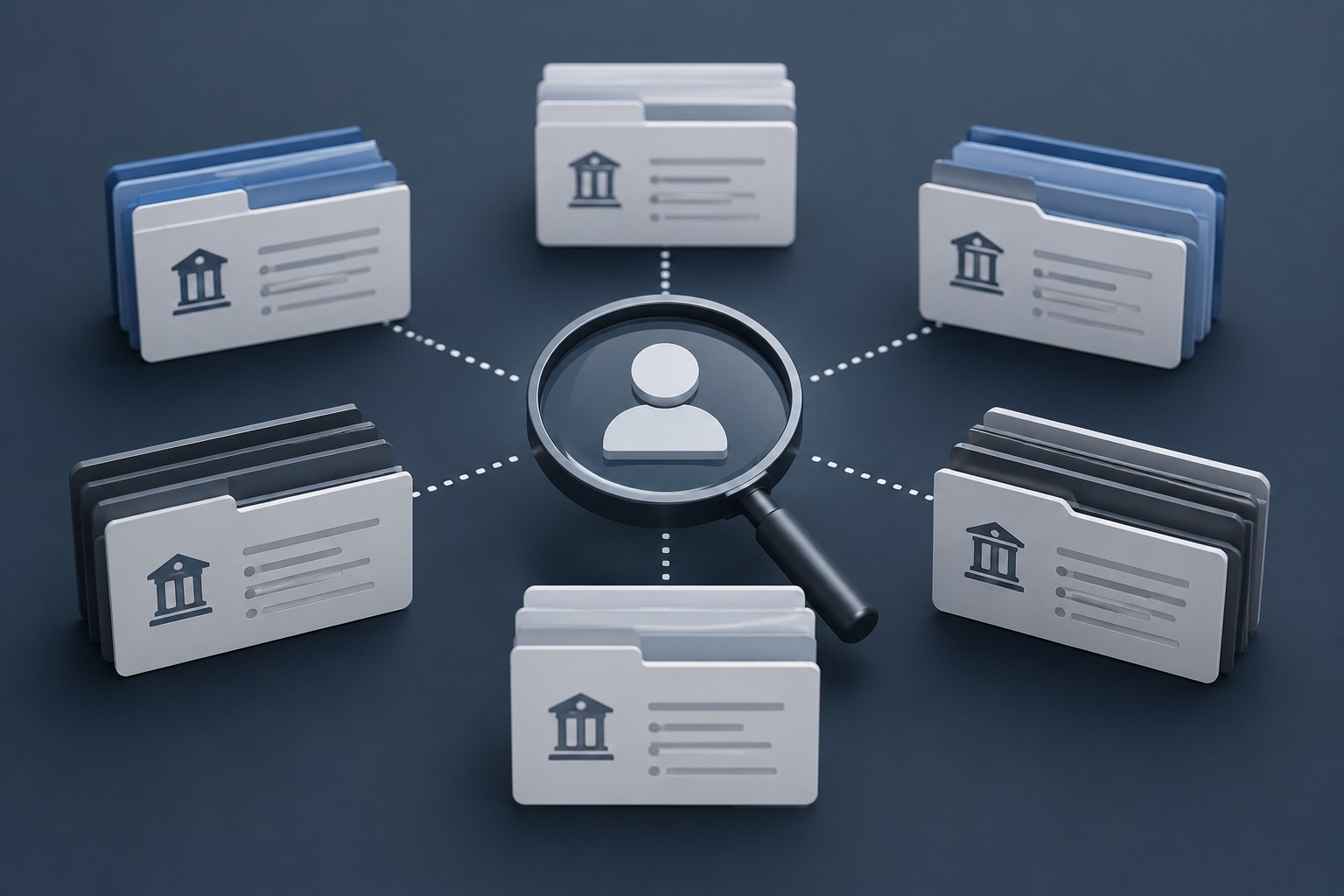
Many employers assume criminal records exist inside one large nationwide database that can instantly produce a complete criminal history by simply running a Social Security number.
That is not how criminal court systems work.
Criminal records in the United States are fragmented across thousands of separate jurisdictions, court systems, repositories, and databases. Courts maintain records differently, reporting standards vary by jurisdiction, and criminal records are typically organized and searched primarily by name rather than by Social Security number.
Understanding how criminal records are actually stored and searched helps employers better understand the background screening process and why criminal search methodology matters.
How Criminal Records Are Stored
Criminal records are generally stored within the court systems where criminal cases are filed and prosecuted.
In the United States, there is no single nationwide criminal court system that contains every criminal case.
Instead, criminal records are spread across thousands of separate jurisdictions, including:
- County courts
- State courts
- Federal courts
- Municipal courts
- Specialized courts
- State repositories
- Correctional systems
Each jurisdiction maintains its own filing procedures, indexing systems, reporting standards, and public access rules.
Some courts provide modern online systems with searchable dockets and electronic case records. Other courts still rely heavily on manual retrieval procedures, clerk-assisted searches, or limited online indexing.
Because courts operate independently, the accessibility and quality of criminal record information can vary significantly depending on the jurisdiction involved.
This fragmented structure is one reason criminal background screening can become far more complex than many employers realize.
There Is No Single Nationwide Criminal Database
One of the biggest misconceptions about criminal background checks is the belief that a complete nationwide criminal database exists.
It does not.
No single database contains every criminal record in the United States.
While some databases aggregate information from multiple jurisdictions, participation and reporting vary substantially.
Some jurisdictions provide extensive updates and detailed reporting. Others may provide delayed reporting, limited information, incomplete disposition data, or no participation at all.
This means there is no single source capable of producing a guaranteed complete nationwide criminal history.
That is one reason employers often use layered screening packages that may include:
- County criminal searches
- Federal criminal searches
- National criminal database searches
- Sex offender registry searches
- Employment or education verifications
Each search type serves a different purpose within the overall screening process.
Criminal Records Are Primarily Name-Based
Many employers believe criminal records are searched primarily using Social Security numbers.
In reality, most criminal court systems are primarily name-based.
Courts commonly organize and index records using combinations of:
- First name
- Middle name
- Last name
- Date of birth
- Case number
This is because courts were designed for judicial administration and case management, not employment screening.
As a result, Social Security numbers are often:
- Unavailable
- Partially masked
- Inconsistently stored
- Non-searchable
- Omitted entirely from public court records
The same is often true for:
- Driver’s license numbers
- Addresses
- Other personal identifiers
When those identifiers do appear, they can be extremely helpful during record research and matching. However, they are not consistently available across jurisdictions.
Dates of birth are often one of the most valuable secondary identifiers available during criminal record research, but even DOB availability varies from court to court.
Because criminal records are primarily name-based, screening methodology and identifier analysis become very important parts of the background screening process.
Why Name Matching Can Become Complex
Criminal record matching is rarely as simple as locating an exact name match.
Several factors can complicate the matching process, including:
- Common names
- Nicknames
- Alias usage
- Maiden names
- Hyphenated names
- Data entry inconsistencies
- Missing middle names
- Similar dates of birth
- Alternate spellings
For example, an individual named “Jonathan Smith” may also appear in court records as:
- Jon Smith
- John Smith
- Jonathan A. Smith
- Jonathan Allen Smith
- J. Smith
Similarly, individuals who change names due to marriage or divorce may have records filed under previous legal names.
This is one reason background screening often involves reviewing multiple identifying factors rather than relying on a single exact-name match.
Proper matching procedures help reduce the risk of inaccurate reporting and improve consistency during the screening process.
Why Aliases Matter During Criminal Searches
Alias research is one of the most important but least understood parts of criminal background screening.
Because criminal records are name-based, records may exist under:
- Prior married names
- Maiden names
- Nicknames
- Alternate spellings
- Hyphenated names
- Abbreviated names
- Prior legal names
If searches are conducted too narrowly, potentially relevant records may be missed.
This is one reason screening companies often review name history and associated identifiers when conducting criminal searches.
A properly developed alias history may help identify jurisdictions or records that would not appear under a single exact-name search.
County Courts vs. Federal Courts
Criminal records are not all stored within the same court system.
County courts and federal courts operate separately and maintain separate records.
County Courts
County courts handle the majority of criminal prosecutions in the United States, including many offenses employers commonly encounter during background screening, such as:
- DUI offenses
- Assault charges
- Theft
- Drug possession
- Domestic violence
- Local fraud cases
County criminal searches are often considered the foundation of employment background screening because most criminal records originate at the county level.
Federal Courts
Federal courts handle violations of federal law, including:
- Wire fraud
- Bank fraud
- Interstate trafficking
- Tax crimes
- Federal conspiracy cases
- Large-scale financial crimes
A county criminal search does not include federal criminal records, and a federal criminal search does not include county court records.
These systems operate independently and must be searched separately.
Criminal Record Availability Varies by Jurisdiction
Not all courts maintain records the same way.
Some jurisdictions provide:
- Real-time online access
- Detailed electronic dockets
- Public digital case records
- Broad searchable indexes
Other jurisdictions may require:
- Clerk-assisted searches
- Manual courthouse research
- Limited public access
- Delayed processing
- In-person retrieval procedures
The quality and completeness of publicly accessible criminal records can vary dramatically from one jurisdiction to another.
This is one reason criminal search turnaround times and reporting depth can differ depending on where searches are conducted.
Why Criminal Searches Are Not Always Instant
Some employers expect criminal background checks to function like instant database lookups.
In reality, criminal background screening often involves multiple layers of research and jurisdiction analysis.
Depending on the court system involved, searches may require:
- Manual review
- Identifier analysis
- Alias review
- Court verification
- Jurisdiction research
- Clerk interaction
- Record reconciliation
Some courts update records frequently, while others may have delays or inconsistent reporting structures.
As a result, more comprehensive criminal screening may sometimes require additional research time.
Common Employer Misunderstandings
Several misconceptions frequently create confusion about criminal background checks.
“There Is One Nationwide Criminal Database”
There is not. Criminal records are fragmented across thousands of independent jurisdictions and court systems.
“Criminal Searches Are Conducted by SSN”
Most criminal court systems are primarily name-based rather than SSN-based.
“All Courts Maintain Records the Same Way”
Court systems vary dramatically in accessibility, reporting practices, indexing quality, and public access procedures.
“All Criminal Records Are Instantly Available”
Some jurisdictions still require manual retrieval procedures or clerk-assisted research.
“One Search Covers Every Jurisdiction”
Criminal records are jurisdiction-specific. A search conducted in one county will not automatically include records from another county or another court system.
It’s also worth noting that what can be reported varies by state. Federal law sets the floor, but some states limit how far back criminal records, including convictions, can be reported, regardless of what a court search might find.
Why Screening Methodology Matters
The quality of a criminal background check depends heavily on the methodology used during the screening process.
Two screening providers may advertise similar services while using very different research procedures behind the scenes.
Factors that may affect screening quality include:
- Jurisdiction selection
- Name matching procedures
- Alias development
- Identifier analysis
- Court access methods
- Search scope
- Research depth
- Verification procedures
A faster or cheaper search does not necessarily produce the most complete or accurate results.
Under the Fair Credit Reporting Act, screening companies are required to follow “reasonable procedures to assure maximum possible accuracy” in their reports, which makes sound name matching and identifier analysis a compliance matter, not just a quality one.
This is one reason employers should understand how criminal records are actually stored and searched rather than assuming all criminal background checks operate identically.
Understanding the structure of criminal court systems also helps explain why search limitations, delays, and jurisdiction differences can occur during the screening process.
Final Thoughts
Criminal records in the United States are not stored inside one centralized nationwide system. Instead, records are fragmented across thousands of separate jurisdictions, court systems, repositories, and databases that maintain records differently and operate independently.
Most criminal searches are primarily name-based rather than SSN-based, which makes identifier analysis, alias review, jurisdiction selection, and careful matching procedures important parts of the screening process.
Additional identifiers such as dates of birth, aliases, prior addresses, driver’s license numbers, or occasionally Social Security numbers may help narrow potential matches, but those identifiers are not consistently available across all court systems.
Understanding how criminal records are stored and searched helps employers better evaluate criminal background screening practices and better understand the limitations of simplified “instant search” assumptions.
Most importantly, employers should recognize that screening methodology matters. Effective criminal background screening often involves layered searches, jurisdiction analysis, name matching, and careful research procedures designed to improve accuracy and consistency.
A properly structured screening program helps employers make more informed hiring decisions while supporting workplace safety, consistency, and compliance.